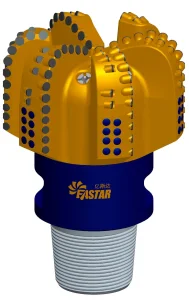
OEM/ODM High-Performance PDC Supplier & Exporter

Empowering Global Drilling & Mining Industries with Next-Gen Polycrystalline Diamond Compact Solutions

Henan Elliott Cutters: Leading Global Standard

Decades of Materials Science Innovation, Precision Sintering, & Unmatched Durability

20+
Years R&D Experience
65,000+
Monthly Sintering Output
35+
Exporting Countries
99.8%
Batch Consistency Rate
🔬

Materials Engineering

Advanced study of microstructures, interfacial bonding, and thermal properties to design PDC cutters that excel in complex geological formations.

⚙️

HTHP Sintering

Utilizing high-pressure and high-temperature technology (over 6.0 GPa) to optimize diamond-to-diamond bonding density and prevent delamination.

🛡️

Extreme Wear Testing

Thermal stability and impact fatigue testing simulate downhole hazards to verify that only premium cutters make it to your job site.

🌐

Custom Design

Tailored interface shapes, non-planar profiles, and specific cobalt leaching depths designed to match unique tool geometries and rock strata.

An Introduction to High-Performance PDC Technology

In the modern energy and mining landscapes, drilling efficiency is directly tied to the performance of cutting elements. Polycrystalline Diamond Compact (PDC) technology represents one of the most critical engineering innovations in geotechnical drilling over the past 50 years. By combining the extreme hardness of diamond crystals with the structural toughness of tungsten carbide substrates under ultra-high-pressure and high-temperature (HPHT) conditions, PDC cutters offer unparalleled shear performance.

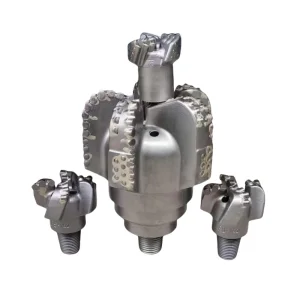
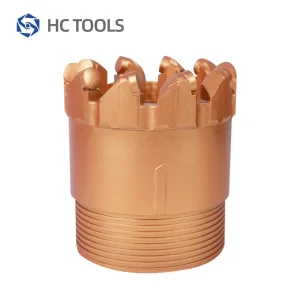
At Henan Elliott Cutters Co., Ltd., we recognize that downhole conditions are increasingly challenging. Deeper wells, highly abrasive formations, and interbedded lithologies demand tools that can maintain structural integrity under high rotational friction and immense impact loads. Our dedicated materials engineering focus ensures that our PDC cutters, insert pins, and bits deliver maximum Rate of Penetration (ROP) while minimizing Non-Productive Time (NPT).

Why the Henan manufacturing ecosystem provides a global advantage

Henan province, China, is widely recognized as the global epicenter for synthetic diamond production. This geographic clustering provides Henan Elliott Cutters with unprecedented structural advantages:

  • Raw Material Accessibility: Secure access to premium quality diamond powders and tungsten carbide powder reduces manufacturing lead times and guarantees stable feed stock.
  • Industrial Synergies: Co-location with world-class research institutes specializing in superabrasives accelerates our iterative product testing and technology deployment cycles.
  • Process Specialization: Highly specialized local suppliers allow us to source and scale process improvements rapidly, keeping our OEM and ODM services exceptionally cost-competitive without sacrificing E-E-A-T credentials.

Advanced Sintering & Cobalt Leaching: The Science Behind Durability

The fundamental challenge in PDC engineering lies in balancing thermal stability, wear resistance, and impact toughness. During the sintering process, cobalt acts as a catalyst to promote diamond-to-diamond bonding (d-d bonding). However, residual cobalt trapped inside the diamond matrix expands at a faster rate than diamond when exposed to friction-induced temperatures above 700°C. This differential thermal expansion leads to micro-cracking and eventual spalling of the diamond layer.
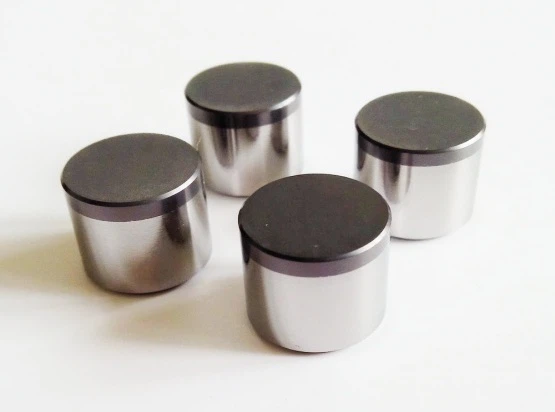
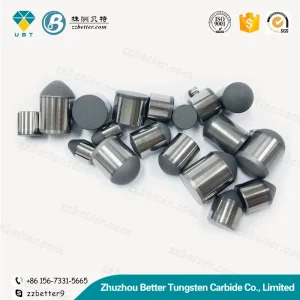
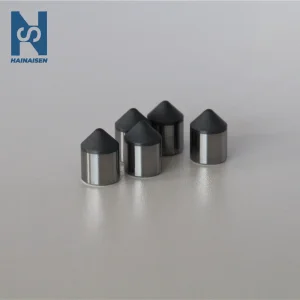
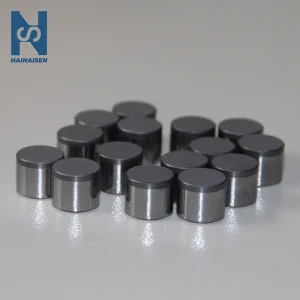
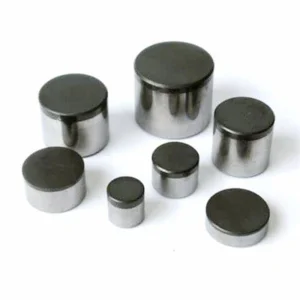
Polycyrstalline Diamond PDC cutter

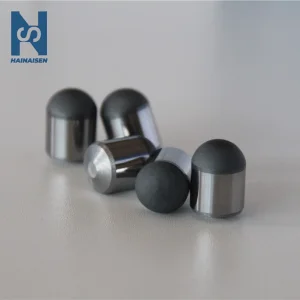
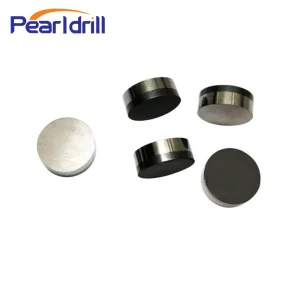
Polycyrstalline Diamond PDC cutter under microstructural inspection

To mitigate this failure mode, Elliott Cutters utilizes controlled chemical acid leaching. By removing cobalt from the cutting edge (usually to depths between 100 to 300 microns), we dramatically increase the thermal threshold of the cutter. This deep-leached layer allows our PDC tools to withstand frictional heat up to 1100°C without catastrophic degradation, assuring reliable performance when drilling through abrasive sandstones and hard carbonate formations.

Global OEM & ODM Customization Capabilities

As a premier OEM/ODM High-Performance PDC Supplier & Exporter, we recognize that a "one-size-fits-all" approach does not work for global operators. Our custom design capabilities address three major vectors of variation:

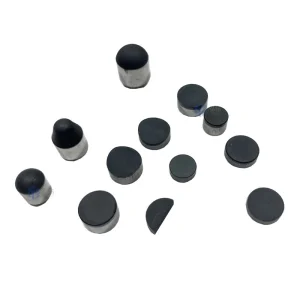
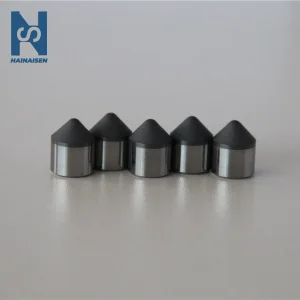
1. Geometry and Profile Optimization: We engineer non-planar interfaces, conical shapes, ridge profiles, and dome-shaped geometries to match your drilling tool dynamics. Non-planar profiles help redistribute residual stresses generated during HPHT sintering, reducing the risk of diamond delamination under impact.

2. Substrate Profile Modification: The interface between the diamond table and the tungsten carbide substrate is engineered with undulating patterns. This geometry increases the interface surface area and absorbs shear stresses, significantly enhancing mechanical bonding.

3. Materials Customization: Depending on the target formation (medium-hard shale, interbedded sand-shale, or abrasive quartzites), we customize the diamond particle size distribution to yield the optimum ratio of impact resistance to abrasive wear resistance.

Target Applications

Operational Values

  • ✓ API Standard Compliant
  • ✓ 100% Ultrasonic Non-Destructive Testing
  • ✓ ISO 9001:2015 Manufacturing Facilities
  • ✓ Secure Global Logistics Pipeline

Our End-to-End Production Process

Rigorous Quality Gates from Raw Material Selection to Final Finished Product Inspection
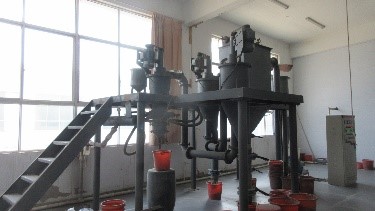
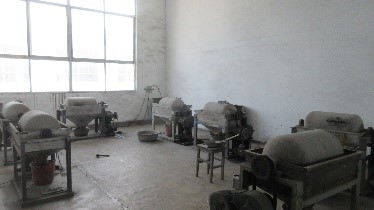
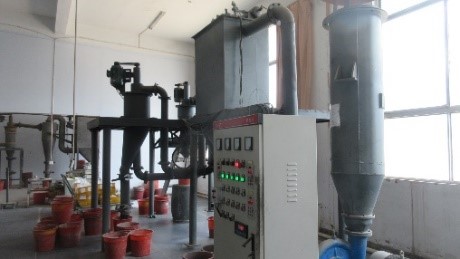
Crushing
1. Crushing
Tungsten carbide and diamond matrix raw material milling and particle size reduction.
Shaping
2. Shaping
Micro-powder shaping process ensures uniform crystal orientation and grain consistency.
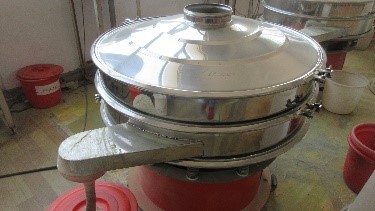
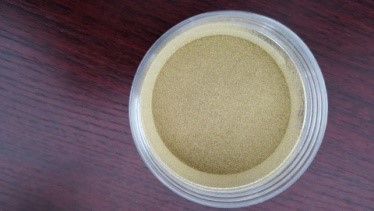
Filtrating
3. Filtrating
Removing fine impurities and segregating diamond grits into narrow size classifications.
Picking
4. Picking
Rigorous visual and spectral inspection to select only prime crystals for sintering.
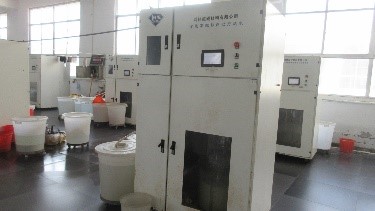
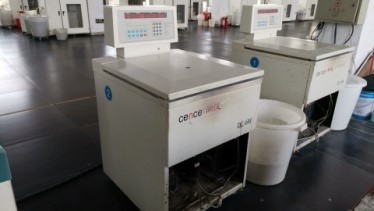
Centrifugation
5. Centrifugation
Density-based classification processes for high-purity material separation.
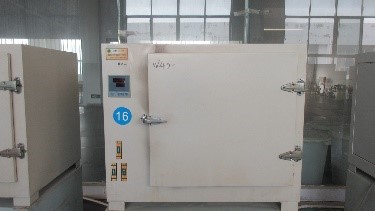
Dry
6. Dry
Dehumidification of refined superabrasive components before pressing.
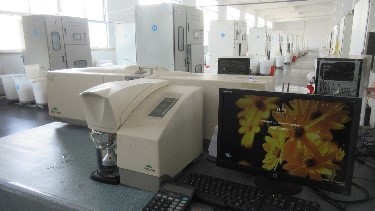
Checking
7. Checking
Comprehensive chemical validation testing to confirm pure carbon phase metrics.
Finished Product
8. Finished Product
HPHT sintered PDC components with precise dimensions, leached surfaces, and final polish.

Precision Machining Facilities

Our manufacturing center features advanced automation to ensure ultra-tight tolerance standards
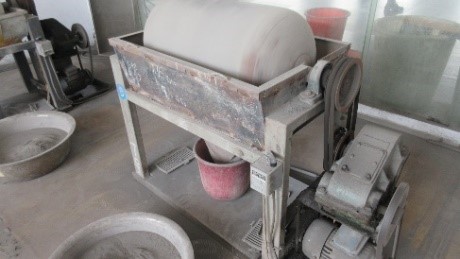
Grinding Machine
Mechanical Grinding Machine
Achieving outer diameter tolerances within ±0.01mm for seamless press-fitting.
Stream Grinding Machine
Refining cutting geometries and edge pre-chapping for maximum fracture toughness.

Macro Solutions & Application Scenarios

Targeted Engineering Specifications Optimized for Diverse Subsurface Challenges

Oil & Gas Drilling
  • Deep Well Formations: Requires thermal stability up to 1100°C for dry rock zones.
  • Shale & Clay Gas: Optimized cutter shear profiles to clear sticky clays rapidly.
  • Directional Subsurface: High-impact resistance to handle torsional vibrations.

Typically utilizes 1313, 1613, and 1916 flat and non-planar face PDC cutters.

Mining & Geological Exploration
  • Hard Rock Formations: Domed and conical cutters optimized for compressive strength.
  • Exploration Coring: Exact dimensional stability for consistent rock sample extraction.
  • Roof Bolting Systems: Compact designs engineered for high rotational speed tools.

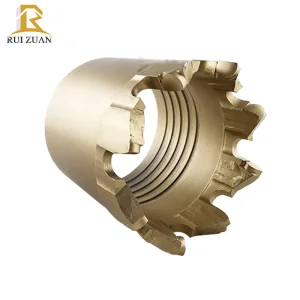
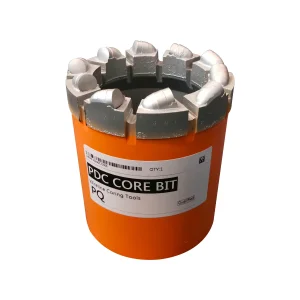
Best paired with 113mm Core Bit tips, conical inserts, and PCD pins.

Road Milling & Tunnelling
  • Asphalt & Concrete: Extreme abrasive resistance requirements to maximize tool life.
  • Tunneling Shields: Robust interface profiles designed to prevent shear failures.
  • Intermittent Loading: Highly tempered cobalt-carbide substrates absorb continuous impact shock.

DTH Hammer inserts, spherical dome profiles, and custom PCD shapes.

Frequently Asked Questions (FAQ)

Key Technical Inquiries from Procurement Engineers & Driller Operators

What causes PDC cutter delamination, and how does Elliott prevent it?
Delamination occurs when high shear stress overpowers the mechanical and thermal bond at the interface of the diamond table and tungsten carbide substrate. We prevent this by designing non-planar substrate profiles that increase surface interface area, and by optimizing the HPHT sintering cycle to minimize internal residual stress.
Why is cobalt leaching critical for high-performance drilling applications?
Cobalt has a thermal expansion coefficient about three times greater than that of diamond. At temperatures above 700°C, cobalt expansion causes micro-fracturing in the diamond matrix. Leaching removes cobalt from the cutting zone, lifting the thermal failure threshold of the cutter edge up to 1100°C.
What are the MOQ parameters and timelines for OEM/ODM orders?
Standard geometries (e.g., 1308, 1313, 1613, 1919 flat cutters) usually have no strict MOQ if raw materials are in stock, with delivery inside 7-10 working days. Custom geometries (conical, specific interface profiles, unique leaching specifications) require customized tooling development, resulting in lead times of 3-4 weeks.
How does Elliott Cutters verify batch-to-batch structural quality?
Each batch undergoes comprehensive Ultrasonic Non-Destructive Testing (UT) to detect voids or structural boundaries. We also conduct destructive tests, including drop-weight testing for impact assessment and vertical lathe tests (VTL) to document abrasion resistance parameters.