Choosing among the Top 10 PDC Cutter Types requires more than comparing diamond content or product photographs. Field performance depends on heat resistance, impact toughness, wear balance, and manufacturing consistency. A cutter may look flawless under bright inspection lights. It can still fail against abrasive sandstone or fractured limestone.
What makes a high-quality PDC cutter? Dr. John Thorogood, a respected drilling technology specialist, offers a practical industry view: “The best cutter is the one that maintains a sharp cutting edge under real drilling conditions.” This principle shifts attention from laboratory claims toward measurable performance. Engineers should examine diamond-table uniformity, carbide-substrate bonding, thermal stability, and edge preparation. Small defects matter. A microscopic void can become a visible chip after repeated impacts.
High-quality cutters also show controlled geometry. Their chamfer should reduce edge breakage without weakening penetration. Their diamond layer should remain stable during elevated temperatures. Batch-to-batch consistency matters just as much. One excellent sample proves very little.
The harder question involves compromise. A highly wear-resistant cutter may perform poorly during sudden impacts. A very tough cutter may sacrifice cutting efficiency. Selection must match formation strength, abrasiveness, temperature, weight on bit, and rotational speed. No universal cutter exists.
Even experienced buyers can overvalue test data. That is worth questioning. Real drilling records, inspection reports, and independent laboratory results provide stronger evidence. The most reliable choice combines verified manufacturing controls with field experience. A premium PDC cutter is not merely hard. It is predictable, balanced, and durable when the drilling environment becomes unforgiving.
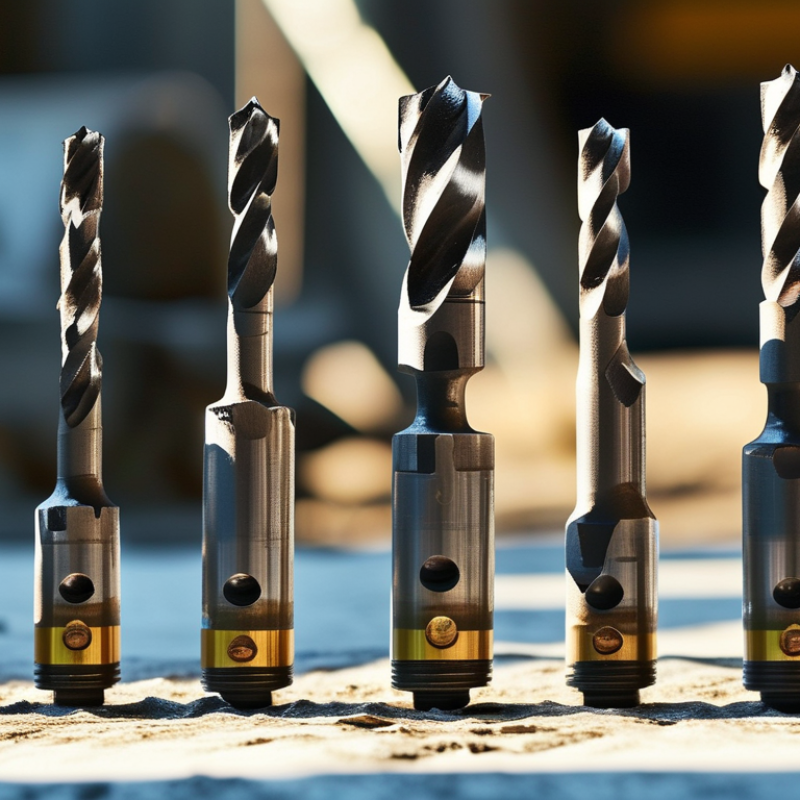
PDC cutters are fixed cutting elements used on drill bits to shear rock. “PDC” means polycrystalline diamond compact. A typical cutter has a diamond table bonded to a tungsten carbide substrate. The diamond layer provides hardness, while the substrate supplies support and toughness. Its geometry affects how force enters the formation. Small details matter.
During drilling, the cutter meets rock at controlled back-rake and side-rake angles. Rotation creates a shearing action instead of repeated impact. Weight on bit pushes the cutter into the surface, while torque moves it across the rock. Heat changes everything. Friction can raise interface temperature, weaken the diamond structure, and accelerate wear. Circulating drilling fluid helps remove heat and rock fragments, although poor flow can leave abrasive debris around the cutter.
High-quality PDC cutters require consistent diamond distribution, strong bonding, accurate dimensions, and clean interfaces. Designs may vary by diamond-table thickness, chamfer shape, size, and impact resistance. In field inspections, I look for edge chipping, polished wear flats, thermal damage, and substrate exposure. These marks reveal more than appearance alone. A cutter can look sharp but perform poorly if its bond is uneven. I have seen cutters selected for strength when the formation demanded sharper shearing. That mistake is easy to repeat. Selection should match rock abrasiveness, compressive strength, vibration risk, cooling conditions, and drilling speed.
The ten main PDC cutter types serve different drilling conditions.
Standard flat cutters provide balanced shearing and reliable wear resistance.
Chamfered cutters reduce edge chipping under impact.
Dome-shaped cutters improve toughness in fractured formations.
Conical cutters concentrate force for harder rock.
Pointed cutters create aggressive penetration with lower contact area.
Ridged cutters add cutting edges for improved rock removal.
Backup cutters support primary cutters and extend working life.
Impact-resistant cutters use tougher structures for vibration-prone drilling.
Thermally stable cutters retain performance under higher temperatures.
Hybrid cutters combine profiles for changing formation layers.
A high-quality cutter should show consistent diamond distribution, secure bonding, and a clean cutting edge. Field experience also matters. A cutter that performs well in laboratory tests may react differently to vibration, mud cooling, or abrasive quartz. No design is perfect. Selection should follow rock strength, depth, temperature, torque, and expected impact. That judgment requires engineering data and practical drilling records.
Tips: Check edge geometry before installation. Match the cutter profile to the formation, not only the drilling speed. Inspect worn cutters for uneven damage; it may reveal poor alignment or unsuitable loading. Small details matter. Even experienced teams sometimes choose aggressive cutters too early. A more conservative profile can deliver steadier footage and fewer trips.
PDC cutter performance begins with two materials that must work as one: diamond and carbide. Diamond grade describes crystal quality, size distribution, thermal stability, and impact resistance. A dense, consistent diamond table usually cuts rock more efficiently. It also holds a sharper edge for longer. However, “higher grade” is not automatically better. In fractured formations, an extremely hard table can chip if toughness is overlooked. That detail is often missed.
Carbide quality supports the diamond table from beneath. Fine, uniform carbide grains improve strength and reduce cracking during pressing. Binder content also matters. Too little binder can make carbide brittle. Too much can reduce hardness and wear resistance. Experienced quality teams inspect density, porosity, flatness, and bond integrity. They also compare cutters after controlled cutting tests, not only microscope checks. A cutter that looks perfect may still fail under heat and vibration.
In practical selection, match diamond and carbide properties to the formation, load, and cooling conditions. Softer rock may reward fast cutting and a polished edge. Hard, abrasive rock usually demands strong wear resistance and careful edge preparation. Field testing shows that small chamfer changes can alter torque and cutter life. Results may vary within one production batch. That is why traceable inspection records and repeat testing matter. No specification replaces field evidence. An expensive cutter can still be the wrong cutter.
Comparative guide to common polycrystalline diamond compact cutter designs, material characteristics, and typical performance behavior.
| Rank | PDC Cutter Type | Typical Diamond Layer / Geometry | Typical Diamond Grade Characteristics | Carbide Substrate Quality Requirements | Main Performance Advantage | Typical Limitation | Common Application | Overall Quality Indicators |
|---|---|---|---|---|---|---|---|---|
| 1 | Standard Flat PDC Cutter | Flat circular diamond table; commonly 8–19 mm cutter diameter; diamond table often about 1.5–3.0 mm thick. | Uniform fine-to-medium diamond distribution, high diamond content, low residual porosity, and consistent layer thickness. | Fine-grained tungsten carbide, controlled cobalt binder content, high transverse rupture strength, and strong diamond-to-carbide bonding. | Balanced cutting efficiency, wear resistance, and manufacturing cost. | Can be vulnerable to impact damage and thermal degradation if cooling is inadequate. | General oil-and-gas drilling, mining, and construction formations. | Even cutting edge, no visible delamination, low chipping, consistent dimensions, and reliable brazing surface. |
| 2 | Thick-Table PDC Cutter | Diamond table generally above the standard thickness range, often approximately 2.5–4.0 mm, depending on diameter and design. | High diamond volume and strong sintered structure to provide greater wear allowance; grain distribution must remain homogeneous through the thicker layer. | High-strength, low-defect carbide substrate with good dimensional stability and a clean, well-prepared interface. | Longer abrasive-wear life and greater resistance to loss of cutting edge. | Higher cutting force and greater sensitivity to poor thermal management. | Highly abrasive sandstone, interbedded formations, and long-run drilling. | Uniform thickness, low porosity, strong interface, low thermal damage, and stable wear profile. |
| 3 | Chamfered-Edge PDC Cutter | Peripheral chamfer commonly about 0.2–0.8 mm wide; chamfer angle and width are selected according to impact severity. | High toughness and consistent diamond density at the cutting-edge transition; moderate-to-fine grains are commonly used for edge stability. | Tough carbide with strong edge support, low internal defects, and accurate concentricity between substrate and diamond table. | Improved resistance to edge chipping, impact loading, and spalling. | A wider chamfer can reduce initial aggressiveness and increase contact area. | Hard, fractured, or variable formations where cutter impact is a concern. | Smooth chamfer, precise edge radius, no microcracks, and uniform chamfer width around the circumference. |
| 4 | High-Impact PDC Cutter | Often uses a robust chamfer, impact-resistant edge preparation, and geometry designed to distribute contact stress. | Tougher diamond architecture, controlled grain-size distribution, and strong intergrowth to reduce crack propagation. | High toughness and fracture resistance are prioritized over maximum hardness; substrate must provide strong mechanical support. | Better survival under interrupted cutting, vibration, and hard inclusions. | May provide lower penetration rate than a more aggressive cutter in homogeneous soft rock. | Broken formations, hard streaks, gravel, and applications with high bit vibration. | Low edge-chipping rate, strong impact-test performance, stable brazed joint, and controlled residual stress. |
| 5 | Thermally Stable PDC Cutter | Designed to reduce thermal sensitivity; geometry may include a reinforced edge or a thermally treated diamond table. | Reduced catalytic-metal influence in the diamond table or controlled post-sintering treatment; low graphitization tendency is essential. | Carbide must tolerate elevated brazing and operating temperatures without distortion, cracking, or excessive binder migration. | Improved resistance to heat-related strength loss and thermal wear. | May require specialized processing and can have higher manufacturing cost. | High-speed cutting, dry or low-cooling conditions, and applications with elevated cutter temperature. | Low thermal degradation, stable hardness after heating, low residual stress, and consistent thermal-cycle results. |
| 6 | Fine-Grain PDC Cutter | Fine diamond grains create a relatively smooth cutting surface and can be combined with a thin or medium-thickness diamond table. | Small, uniform diamond grains improve edge sharpness, surface finish, and resistance to micro-chipping. | Fine-grained carbide with good edge support and low surface roughness to reduce stress concentration. | Smooth cutting action, lower cutting vibration, and good performance in relatively homogeneous material. | Can wear faster than a coarser, thicker cutter in highly abrasive rock. | Precision machining, compact rock, ceramics, composites, and finishing-oriented cutting. | Consistent grain distribution, smooth surface, sharp edge, low porosity, and low edge chipping. |
| 7 | Coarse-Grain PDC Cutter | Coarser diamond structure with a robust cutting face; often selected with a thicker table for abrasive-duty service. | Larger diamond crystals can provide high abrasion resistance and thermal conductivity, provided intergrowth is adequate. | Tough, high-strength carbide is required to support the larger-grain diamond layer and resist impact transfer. | High wear resistance and efficient heat dissipation in abrasive material. | A rougher cutting surface and larger individual grains may increase susceptibility to edge fracture under impact. | Abrasive rock, mineral processing, and long-duration cutting. | Strong grain intergrowth, controlled grain-size spread, low pull-out, and predictable wear. |
| 8 | Leached PDC Cutter | A chemically treated surface zone removes part of the metallic catalyst from the diamond table to improve heat resistance. | Lower residual catalyst content near the surface, reduced thermal expansion mismatch, and improved resistance to graphitization. | Substrate must have a clean interface and sufficient toughness because excessive treatment can reduce structural support. | Better thermal stability during high-temperature cutting and reduced heat-related degradation. | The treated layer may be more brittle if processing is poorly controlled or if support is insufficient. | High-temperature machining, abrasive formations, and limited-cooling operations. | Controlled treatment depth, clean transition zone, no surface cracking, and repeatable thermal performance. |
| 9 | Spear-Point or Pointed PDC Cutter | Pointed or raised cutting profile that concentrates contact stress over a smaller initial area. | High hardness and good edge integrity are required; diamond distribution must support the concentrated load at the point. | High-strength carbide with precise support beneath the point and strong resistance to bending or local crushing. | Aggressive rock penetration and improved cutting initiation in hard material. | Concentrated stress can increase point wear or fracture if impact loading is excessive. | Hard-rock drilling, directional cutting, and specialized mining tools. | Accurate profile geometry, strong point support, low crack density, and consistent tip height. |
| 10 | Multi-Modal PDC Cutter | Diamond table combines different grain-size populations or functional zones to balance sharpness, toughness, and wear life. | Fine grains can improve edge integrity while coarser grains can support wear resistance and thermal transport; zone transitions must be controlled. | Substrate needs uniform support and compatible thermal-expansion behavior across the entire diamond table. | Balanced performance across changing formation hardness, abrasiveness, and impact conditions. | More complex processing increases the importance of interface control and quality inspection. | Variable formations, mixed-material cutting, and applications requiring a wide operating window. | Controlled zone boundaries, uniform sintering, low delamination risk, stable wear transition, and repeatable testing results. |
High-quality PDC cutters begin with carefully selected diamond grit and a stable carbide substrate. Grain size affects cutting sharpness, wear resistance, and thermal behavior. Uniform grit distribution matters. Uneven particles can create weak points along the cutting edge. Different profiles, including flat, chamfered, conical, and domed cutters, require different material balances. Geometry must match the drilling load and formation hardness.
Manufacturing pressure and temperature need close control during sintering. Excessive heat may damage the diamond table or weaken its bond with the substrate. Insufficient pressure can leave internal porosity. Neither problem is easy to detect by appearance alone. Experienced manufacturers examine microstructure, interface bonding, edge symmetry, and dimensional accuracy. A small chamfer error can change cutting force in the field. Surface finishing also deserves attention because rough edges may chip during impact.
Reliable production includes hardness checks, thermal stability testing, abrasion evaluation, and controlled impact tests. Each batch should have traceable records for materials, pressing conditions, and inspection results. In practical use, cutters face vibration, pressure changes, and repeated thermal cycling. Laboratory results cannot represent every formation. That limitation deserves honest attention. No cutter is perfect. Better quality comes from reducing predictable defects and learning from failures without hiding them.
Top 10 PDC Cutter Types: What Makes Them High Quality?
Selecting the Right PDC Cutter for Drilling Conditions and Applications
Choosing among ten common PDC cutter designs starts with the formation, not the catalog. Standard flat cutters suit many uniform, medium-strength intervals. Chamfered cutters improve edge support in abrasive rock. Non-planar, conical, dome, ridged, and backup cutters can manage impact, tracking, or wear. Thermal-stable cutters are useful where friction raises cutting temperature. Micro-textured and high-impact designs may improve durability, but their value depends on bit layout and drilling conditions.
Start with the rock. Soft shale may reward an aggressive cutter with a sharp exposed edge. Hard limestone often needs stronger support and controlled depth of cut. Interbedded formations are less forgiving. A rounded profile can reduce chipping when the bit meets sudden changes. In fractured ground, impact resistance matters more than maximum initial sharpness. Mud properties, weight on bit, rotary speed, and hydraulic cleaning also affect cutter life. A good selection considers all four.
Field records should guide the final choice. Compare dull condition, footage, torque changes, and penetration rate from nearby wells. Ask whether heat, abrasion, or impact caused the failure. Laboratory tests help, but they cannot fully reproduce downhole vibration. That limitation matters. A cutter may look excellent on paper yet underperform after poor exposure design or excessive drilling force. Select claims that evidence supports, then review results after each run. Keep the process practical.
Relative suitability scores from 1 to 10 based on common PDC cutter design characteristics. Higher values indicate stronger suitability for the listed drilling condition or performance priority.
Flat-top and chamfered cutters are widely used for balanced drilling performance. Dome, conical, and reinforced-edge designs generally provide better impact resistance in hard or interbedded formations, while ridged and shear-enhanced cutters can improve cutting efficiency and reduce torque in suitable applications.
A PDC cutter is a fixed cutting element on a drill bit. It shears rock during rotation. A diamond table provides hardness. A carbide substrate adds support and toughness.
Weight on bit pushes the cutter into the formation. Torque moves it across the surface. This creates shearing rather than repeated impact. Cutter angles control how force enters the rock.
Friction can raise the temperature at the cutting interface. Excessive heat may weaken the diamond structure and accelerate wear. Circulating fluid removes heat and rock fragments. Poor flow can leave abrasive debris nearby.
Important factors include uniform diamond grit, strong bonding, accurate dimensions, and clean interfaces. Sintering pressure and temperature require careful control. Internal porosity may remain hidden.
Inspectors should examine edge symmetry, interface bonding, microstructure, and dimensional accuracy. Field checks should include edge chipping, polished wear flats, thermal damage, and substrate exposure. Appearance alone can mislead.
Choose based on rock abrasiveness, compressive strength, vibration risk, and cooling conditions. Soft shale may need a sharper exposed edge. Hard limestone often needs stronger edge support.
Chamfered cutters can support the edge in abrasive rock. Rounded profiles may reduce chipping in fractured or interbedded formations. They may reduce initial sharpness. That trade-off matters.
Laboratory testing measures abrasion, hardness, thermal stability, and controlled impact resistance. It cannot fully reproduce downhole vibration or changing rock layers. Field records still matter. Review each run honestly.
PDC cutters are composite cutting elements that combine a polycrystalline diamond layer with a cemented carbide substrate. Their working principle depends on the diamond surface shearing rock while the carbide support provides strength and stability. The ten main types can be distinguished by factors such as cutter size, shape, chamfer design, diamond thickness, thermal resistance, impact strength, and specialized geometry. These variations allow cutters to perform differently in soft, abrasive, hard, fractured, or high-temperature formations.
What makes a high-quality PDC cutter? Its performance is determined by consistent diamond grade, strong bonding between the diamond table and carbide substrate, uniform carbide structure, accurate dimensions, and controlled manufacturing conditions. Careful sintering, surface finishing, edge preparation, and quality inspection help improve wear resistance, impact durability, thermal stability, and cutting efficiency. Selecting the right cutter also requires considering formation hardness, abrasiveness, compressive strength, drilling speed, weight on bit, temperature, and vibration. A proper match between cutter design and drilling conditions can extend service life, improve stability, and reduce overall operating costs.

Elliott Cutters