The world of PDC technology is evolving rapidly. To fully understand this landscape, we must ask ourselves, "What are the latest trends in PDC technology?" According to Dr. Emily Carter, a leading expert in drilling technology, "PDC innovation is shaping the future of exploration." Her insight highlights the transformative nature of these advancements.
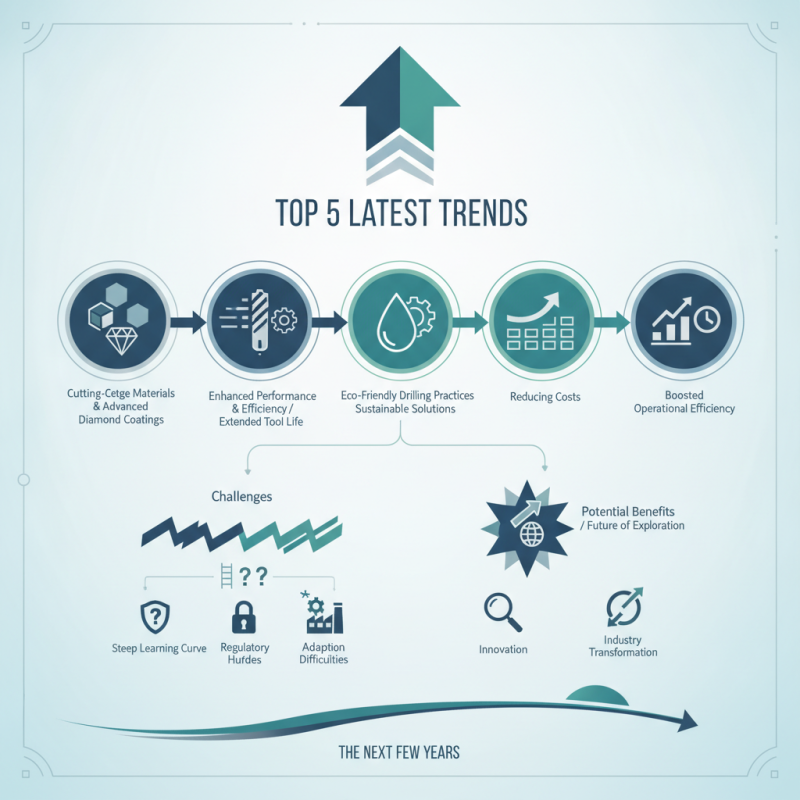
Recent advancements in PDC technology are worth exploring. Cutting-edge materials and designs are enhancing performance and efficiency. The use of advanced diamond coatings has improved wear resistance and extended tool life. These developments not only reduce costs but also boost operational efficiency. As industries seek sustainable solutions, the trend towards eco-friendly drilling practices is also gaining traction.
However, the implementation of these technologies comes with challenges. Not all companies are equipped to adapt quickly. There may be a steep learning curve for operators. Moreover, regulatory hurdles can impact the speed of deployment. Despite these challenges, the potential benefits of modern PDC technology are undeniable. The next few years will reveal much about how these trends will shape the future of the industry.
Recent advancements in PDC bit design are transforming the drilling industry. Engineers are focusing on improving cutting structure, materials, and geometries. These innovations result in enhanced performance and reliability. For instance, the use of advanced diamond technologies provides better wear resistance. This leads to longer bit life and reduced downtime.
Another significant trend is the incorporation of smart technology. Data analytics is optimizing drill bit performance in real-time. Operators can adjust drilling parameters based on immediate feedback. This proactive approach maximizes efficiency and minimizes costs. Additionally, the design of bits now often incorporates unique features for specific formations. Understanding geological challenges is essential.
However, not all innovations are perfect. Some new designs risk becoming too complex. Balancing simplicity and advanced features is crucial for widespread adoption. Continuous evaluation of design effectiveness remains essential. Despite challenges, the future of PDC technology looks promising. Enhanced drilling performance is achievable through ongoing research and development.
The durability and efficiency of PDC (Polycrystalline Diamond Compact) tools are heavily influenced by coating technologies. Advanced coatings enhance performance by improving wear resistance and reducing friction. A recent industry report indicates that diamond-coated PDC bits can last up to 30% longer in high-abrasion environments. This significant increase in longevity directly correlates with operational cost savings for drilling operations.
Innovative coating techniques, such as chemical vapor deposition, optimize tool performance. These methods allow for precise control over coating thickness and composition. According to data from recent studies, these advancements can increase the life of PDC tools by 20% to 50% on average. However, not all coating technologies deliver the same results. Some may require additional maintenance or become less effective after prolonged use.
Moreover, the choice of coating must correspond to the specific drilling conditions. For instance, a generic coating might excel in one environment but fail in another. This raises questions about adaptability and long-term reliability. The industry continues to explore how these variables affect overall efficiency and durability. Balancing cost, performance, and maintenance requirements remains a challenge that many engineers face today.
The emergence of superabrasives in PDC cutter technology marks a significant shift. These materials are redefining drilling efficiency and lifespan. Superabrasives like diamond composites enhance wear resistance. They outperform traditional materials, resulting in longer operational periods and lower costs.
However, the transition to these advanced materials is not without challenges. The high manufacturing costs and technical complexities can hinder widespread adoption. Companies often face difficulties in scaling production. This can lead to inconsistency, affecting overall reliability in performance. Continuous research is necessary to address these concerns.
Beyond superabrasives, new innovations in PDC cutter design are being explored. For instance, customized geometries can optimize cutting performance in specific conditions. This personalization can lead to better results, but it requires deeper understanding of geological variables. It’s crucial to balance innovation and practical application to fully realize the potential of these materials in the field.
| Trend | Description | Material Innovation | Impact |
|---|---|---|---|
| 1. Enhanced Superabrasives | Development of advanced diamond coatings and composites for better performance. | Polycrystalline Diamond (PCD) and Cubic Boron Nitride (CBN) | Increased durability and extended tool life. |
| 2. Environmental Sustainability | Focus on eco-friendly materials and manufacturing processes. | Recyclable PDC materials | Reduced environmental footprint. |
| 3. Smart Cutting Tools | Integration of IoT technology for real-time data collection and analysis. | Smart sensors embedded in PDC | Enhanced decision-making and predictive maintenance. |
| 4. Customization and Specialization | Tailored solutions for specific drilling applications and conditions. | Application-specific PDC designs | Improved operational efficiency. |
| 5. Advanced Coating Technologies | Use of multilayer coatings to enhance wear resistance. | Diamond-like carbon (DLC) coatings | Increased performance under extreme conditions. |
Digital technology is reshaping the landscape of PDC (Polycrystalline Diamond Compact) technology. The integration of smart solutions is evident. These innovations allow for real-time data analysis and improved operational efficiency. Companies can now collect and analyze vast amounts of data at unprecedented speeds. This capability helps optimize drilling processes, reducing costs significantly.
However, challenges remain. Many organizations struggle to fully harness these data-driven insights. The sheer volume of information can be overwhelming. Users may find it difficult to separate valuable insights from the noise. There is also the risk of data security issues. Protecting sensitive information is critical as digital solutions proliferate.
Moreover, implementing these smart PDC solutions can require substantial investment. Companies must evaluate whether the benefits justify the costs. Not all organizations may have the technical expertise to put these innovations into practice. Continuous learning and adaptation are necessary for successful integration. Balancing technology with human oversight remains crucial for maximizing efficiency.
Sustainable practices in the manufacturing of PDC technology are becoming increasingly important. Companies are focusing on reducing their environmental footprint. These efforts not only help the planet but can also improve operational efficiency. Using recycled materials is one way to achieve this. It lowers waste and promotes a circular economy, but it requires careful sourcing.
Energy consumption is another critical issue. Many manufacturers are transitioning to renewable energy sources. Solar and wind power can greatly reduce carbon emissions. However, this shift requires significant investments, which some companies may hesitate to make. The transition can also be challenging due to operational disruptions during the changeover.
Water usage in the PDC manufacturing process deserves attention. Reducing water waste is essential for sustainability. Implementing closed-loop water systems can help recycle water used in production. Yet, not all companies have adopted these systems. Awareness and commitment to water conservation practices are still evolving in the industry. This journey toward sustainability is complex, but every small step counts.
: Superabrasives are advanced materials that enhance drilling efficiency and lifespan, notably diamond composites.
They provide better wear resistance and outperform traditional materials, leading to longer operational periods and reduced costs.
High manufacturing costs and scaling difficulties can hinder their widespread adoption, causing inconsistencies in performance.
Customized geometries can optimize performance under specific conditions, requiring a deeper understanding of geological factors.
Digital technology integrates smart solutions for real-time data analysis and enhanced operational efficiency in drilling processes.
Organizations often struggle with data overload and filtering valuable insights, leading to potential security issues.
Companies must weigh the investment against potential benefits, as not all may have the expertise for implementation.
Balancing technology with human input is crucial for maximizing efficiency and ensuring that insights lead to actionable results.
Ongoing research is necessary to address material challenges and improve understanding of drilling performance and efficiency.
Yes, but it requires practical application and a balance between innovation and user understanding of geological conditions.
Recent advancements in PDC (polycrystalline diamond compact) technology have significantly enhanced drilling performance and efficiency. One of the latest trends in PDC technology includes innovative designs in PDC bits that optimize performance in challenging drilling environments. Additionally, advancements in coating technologies have improved the durability and efficiency of PDC tools, allowing for longer operational lifespans and reduced downtime.
Emerging trends also highlight the development of superabrasive cutter materials, which provide superior cutting capabilities. The integration of digital technologies into PDC solutions has paved the way for smart tools that offer data-driven insights, optimizing drilling operations. Furthermore, sustainable practices in PDC manufacturing are gaining traction, focusing on reducing the environmental footprint of production processes. In summary, what are the latest trends in PDC technology? They are characterized by improved designs, innovative materials, digital integration, and a strong emphasis on sustainability.

Elliott Cutters