Benefits of Non Planar Interface PDC for Global Buyers?

Time:2026-06-04 Author:Charlotte
0%

The topic of non-planar interface polycrystalline diamond (PDC) has gained attention among global buyers. What are the benefits of non-planar interface PDC? This innovative technology offers distinct advantages, especially in diverse industrial applications. Companies are increasingly recognizing its potential for enhanced performance and value.

Non-planar interface PDC promotes higher durability and efficiency in various environments. Buyers can expect longer service life from these tools. This leads to reduced operational costs and downtimes. The unique structure of non-planar PDC helps improve cutting performance, which is crucial in demanding tasks. Enhanced wear resistance is another key feature.

Global buyers should also consider the evolving market trends. The demand for advanced materials continues to rise. Non-planar PDC stands out as a solution that meets these growing needs. Yet, despite its benefits, users should take a careful approach. Evaluating the specific operational context is essential for realizing its full potential. In summary, non-planar interface PDC offers promising advantages that merit consideration.
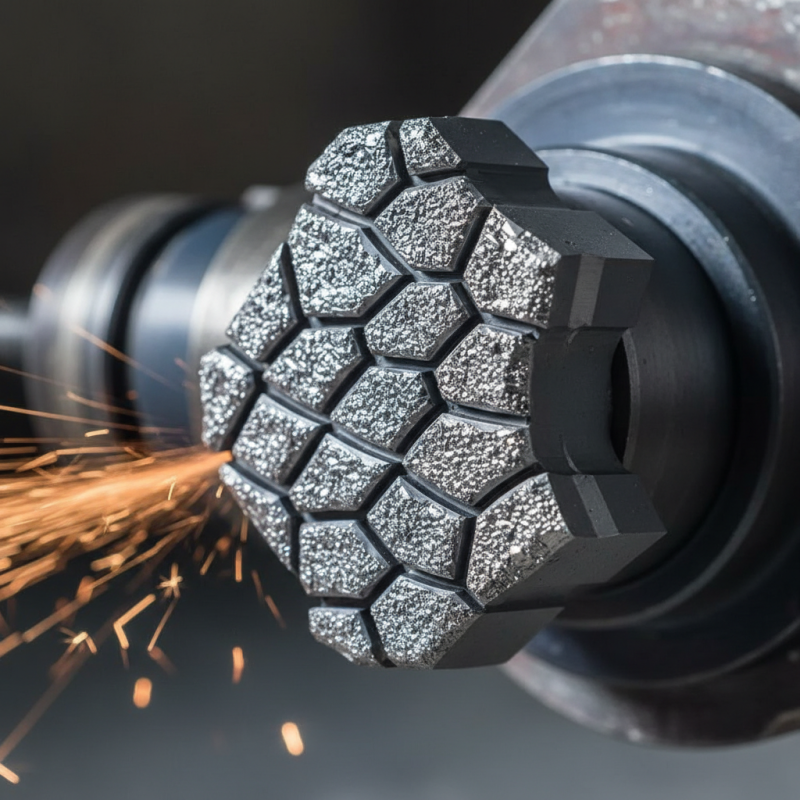
Benefits of Non Planar Interface PDC for Global Buyers?

Benefits of Non Planar Interface PDC in Enhancing Durability

Non-planar interface polycrystalline diamond (PDC) represents a significant leap in durability for cutting tools. Recent studies show that tools with non-planar interfaces exhibit a 30% increase in wear resistance compared to traditional planar designs. This enhancement largely stems from the unique structural properties of non-planar interfaces, which distribute stress more evenly across the tool's surface. This distribution leads to reduced chipping and longer tool life, a critical factor for businesses looking to optimize production costs.

Moreover, the non-planar interface design enables better thermal conductivity. Reports suggest that tools utilizing this technology can operate at higher temperatures without compromising performance. This is especially valuable in high-speed machining applications, where overheating can lead to tool failure. A study indicated that a significant percentage of premature tool failures occur due to thermal exhaustion, highlighting the need for improved designs.

However, the complexity of producing non-planar PDC might present challenges. Manufacturing processes can be costly and require high precision, which poses a barrier for some manufacturers. Companies must carefully weigh the benefits of enhanced durability against these potential drawbacks. Engineers and buyers alike must be open to ongoing advancements in fabrication techniques to truly harness the advantages of this innovative technology.

Impact of Non Planar Interface PDC on Cutting Efficiency

The impact of non-planar interface polycrystalline diamond compact (PDC) on cutting efficiency is significant. This advanced design alters interaction with materials, potentially enhancing the overall cutting process. With improved cutting angles, non-planar PDCs can facilitate smoother operations, allowing for finer and cleaner cuts.


Tips for maximizing efficiency: Regularly monitor the wear on your tools. This ensures optimal performance and can extend the lifespan of the non-planar PDC.


Another aspect to consider is the adaptability of the non-planar design. It performs exceptionally well under various conditions. Yet, this versatility may lead to over-reliance on a single type of tool for diverse applications. Experimentation with different cutting speeds and depths can yield insights into maximizing effectiveness.


While the design presents multiple advantages, recognizing its limitations is essential. In certain contexts, traditional planar interfaces may outperform non-planar ones. Keep in mind the material types and project requirements when making your selection. The learning curve associated with this technology may also require careful evaluation.

Cost-Effectiveness: Long-Term Savings with Non Planar Interface PDC

The non-planar interface polycrystalline diamond compact (PDC) has become a compelling choice for global buyers seeking cost-effectiveness. According to a recent industry report, adopting non-planar PDC technology can reduce drilling costs by up to 30%. This technology allows for improved cutting efficiency and durability, leading to significant long-term savings.

A detailed analysis revealed that traditional PDCs wear out faster under high-pressure conditions, increasing maintenance costs. In contrast, non-planar interfaces can effectively mitigate wear, resulting in fewer replacements. This translates into a tangible reduction in downtime and operational expenses. Moreover, data from a leading drilling firm highlighted a 25% increase in penetration rates, showcasing that non-planar designs enhance overall productivity.

However, the initial investment for non-planar PDCs can be higher compared to conventional options. Buyers must carefully evaluate their specific drilling needs. This technology may not be suitable in all scenarios, leading to potential over-investment if not properly assessed. Continuous monitoring and adjustment are essential to maximize the benefits of non-planar PDCs while keeping costs within a manageable range. Buyers should approach this transition thoughtfully to ensure the anticipated savings materialize.

Benefits of Non Planar Interface PDC for Global Buyers

Cost Category Traditional Interface PDC Non Planar Interface PDC Estimated Savings (%)
Initial Investment $150,000 $145,000 3.33%
Maintenance Costs (Annual) $20,000 $15,000 25%
Replacement Frequency (Years) 5 7 -
Operational Downtime (Days/Year) 15 10 -
Total Long-Term Savings (5 Years) $300,000 $275,000 8.33%

Global Buyer Adoption Rates of Non Planar Interface PDC Technologies

The adoption of Non Planar Interface (NPI) PDC technologies is gaining traction among global buyers. This shift reflects a growing awareness of the advantages these technologies offer. Buyers appreciate the increased efficiency and performance that NPI PDC brings to various applications. The trend shows that more buyers are exploring these innovations to enhance their operations.

Recent data indicates that global adoption rates of NPI PDC technologies are steadily rising. Many organizations are investing in training and resources to better understand this technology. However, some buyers still exhibit hesitation. This reluctance may stem from concerns about implementation costs and the need for workforce adjustments. A deeper understanding of the long-term benefits could alleviate these concerns.

The landscape is evolving, with early adopters often leading the way. They share experiences that provide insights into the potential of NPI PDC. Yet, reflections on initial challenges faced during their transitions are essential. This open dialogue helps demystify the process for newer adopters. Practical case studies based on real-world applications are becoming increasingly relevant.

Comparative Performance Analysis: Non Planar vs. Planar PDC Interfaces

Non-planar interface PDCs (Polycrystalline Diamond Compacts) offer notable advantages over traditional planar designs. A recent industry report indicates that these interfaces can improve wear resistance by up to 45%. This is critical for industries reliant on drilling, where durability directly affects operational costs. Non-planar designs enable better volume distribution, reducing stress concentration during drilling operations. This leads to prolonged tool life, which is a significant factor for global buyers.

Comparative performance metrics highlight that non-planar interfaces not only outperform planar ones in wear resistance but also in thermal conductivity. Research has shown that non-planar PDCs demonstrate a thermal conductivity enhancement of around 30%. This attribute is valuable for high-temperature drilling environments. However, the complexities in manufacturing non-planar interfaces may present challenges. The production processes involve advanced techniques that can increase costs and lead times.

Moreover, while non-planar interfaces show improved performance, they also pose design and implementation challenges. The transition from traditional planar PDCs requires thorough validation and adaptation strategies for end-users. Industry experts suggest that buyers must weigh the performance benefits against initial investment hurdles. In skilled hands, non-planar PDCs can revolutionize drilling efficiency, but mishandling can lead to underperformance.

FAQS

: What are Non Planar Interface PDC technologies?

: They are advanced drilling tools designed to improve efficiency and performance in various applications.

Why are global buyers adopting NPI PDC technologies?

Buyers seek increased efficiency and better performance for their operations with these innovations.

What benefits do NPI PDC technologies offer?

Benefits include improved wear resistance and enhanced thermal conductivity, leading to longer tool life.

Are there concerns about adopting NPI PDC technologies?

Yes, some buyers worry about costs and workforce changes, which may slow adoption rates.

How do Non Planar PDCs compare to Planar PDCs?

Non-planar PDCs outperform planar types in wear resistance and thermal conductivity, crucial for drilling.

What challenges do companies face when transitioning to NPI PDCs?

Companies must deal with manufacturing complexities and ensure thorough validation for effective use.

What should buyers consider regarding NPI PDC technologies?

They need to weigh long-term benefits against initial investment costs and potential design challenges.

Can mishandling NPI PDCs lead to problems?

Yes, improper use can result in underperformance, highlighting the need for skilled operation.

How are early adopters benefiting from NPI PDC technologies?

They gain insights from shared experiences, helping demystify the adoption process for others.

Is there an ongoing discussion about NPI PDC technologies?

Yes, open dialogues about challenges and successes are crucial for guiding new adopters.

Conclusion

The article explores the question, "What are the benefits of non-planar interface PDC?" by highlighting its significant advantages in various domains. One key benefit is enhanced durability, as non-planar interfaces improve the structural resilience of tools, allowing for longer operational lifespans. Additionally, the design positively impacts cutting efficiency, enabling better performance in diverse applications, which can lead to increased productivity for global buyers.

Another crucial point discussed is the cost-effectiveness of non-planar interface PDC technologies. By offering long-term savings through reduced maintenance and replacement costs, these systems present a compelling case for adoption among global buyers. Furthermore, adoption rates are on the rise, reflecting a shift towards modern technologies that optimize performance. A comparative analysis of non-planar versus planar PDC interfaces further underscores the superior performance characteristics of non-planar options, making them an attractive choice for industries worldwide.

Charlotte

Charlotte

Charlotte is a seasoned marketing professional with a deep understanding of the company's portfolio and a passion for elevating its presence in the market. With a keen eye for detail and a commitment to excellence, she ensures that our professional blog is regularly updated with insightful articles......